

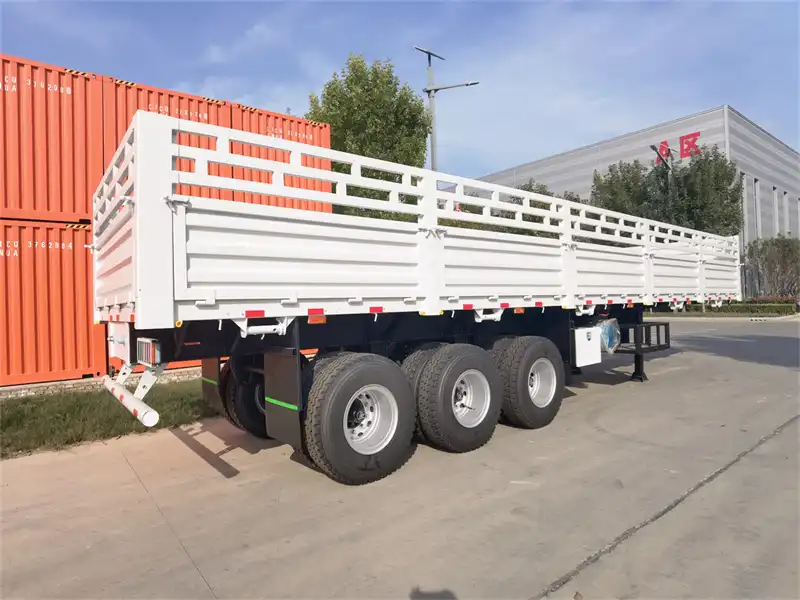
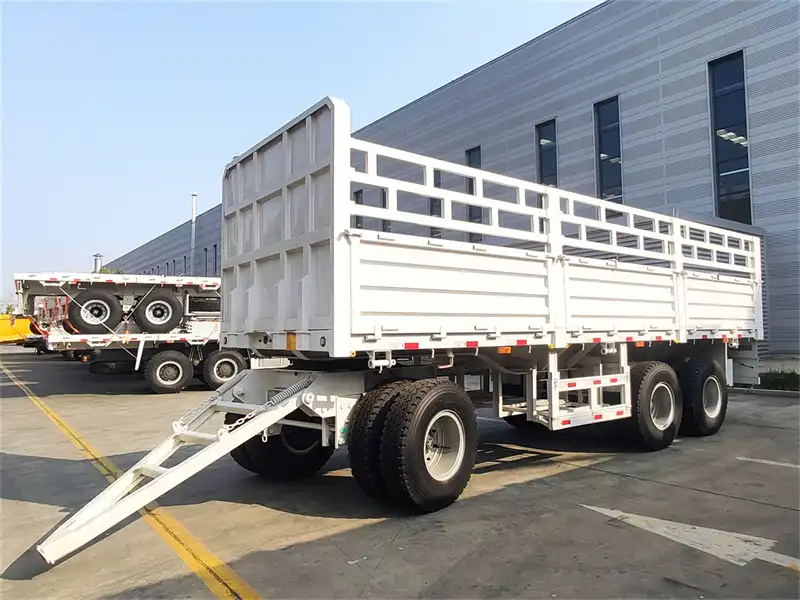



Air suspension gives a semi-trailer a smoother ride, better protection for cargo and less stress on the chassis. It also has more parts than a mechanical suspension, so regular inspection matters. Most air suspension failures start with a loose nut or bolt that went unnoticed. A simple, scheduled check can prevent them and keep your trailer safe on the road.
This guide sets out a practical semi trailer air suspension maintenance schedule, from the first trip of a new trailer to the 6-month service.
Maintenance Schedule at a Glance
| When | What to Check |
|---|---|
| After the first loaded trip of a new trailer | Bracket nuts, shock absorber nuts, U-bolt nuts, and the bolts and nuts above and below the air bag. Tighten any that are loose. |
| Every 3 months or 25,000 km | Bracket condition, shock absorber operation, bracket lock nuts and U-bolt nuts. Look for cracks, failure or loosening at high-stress points. |
| Every 6 months or 50,000 km | Repeat all the checks above, then inspect the air bags and guide arms closely. Use a qualified technician for repairs. |
Step 1: Check After the First Loaded Trip of a New Trailer
A new trailer settles in during its first loaded run. Fasteners can loosen slightly as parts bed in, so the first inspection after a loaded trip is the most important one. Check these points:
- Bracket nuts on the suspension hangers
- Shock absorber nuts at both mounting points
- U-bolt nuts that hold the axle to the suspension
- Bolts and nuts above and below the air bag
If any fastener is loose, tighten it right away. Following the manufacturer’s torque specification is the safest approach.
Step 2: Inspect Every 3 Months or 25,000 km
At this interval, concentrate on the parts that carry load and take the most stress. Check the following:
- Bracket integrity: look for cracks, deformation or damaged welds.
- Shock absorber operation: confirm that the shock absorbers work normally, with no leaks or damage.
- Bracket lock nuts and U-bolt nuts: confirm they are still tight.
Why these parts? Brackets, lock nuts and U-bolts are load-bearing points where stress concentrates. Cracks, failure or loosening here should be dealt with immediately, since a small problem can quickly turn into serious damage.
Step 3: Full Inspection Every 6 Months or 50,000 km
At six months or 50,000 km, repeat every check listed above, including all bolts and nuts. Then pay special attention to two components:
- Air bags: check their condition and how they are wearing. Look for cracks, abrasion, damage and air leaks.
- Guide arms: check their condition and wear, including the connections at each end.
Air suspension is a fairly complex system. If you find any problem at this stage, have it repaired by a qualified technician. Professional repair is the best way to keep the trailer running safely over the long term.
Practical Tips for Trailer Owners
- Keep a maintenance record with the date, mileage and findings of each inspection, so problems are easy to trace.
- Shorten the intervals if conditions are tough. Heavy loads, rough roads and long hauls put extra stress on the suspension. In these cases, check more often than the schedule above.
- Do not delay repairs. A loose bolt costs almost nothing to fix today, while a damaged bracket or air bag can mean downtime and a much larger bill.
- Use quality replacement parts that match the original specification.
Air Suspension Semi Trailers Built for Heavy-Duty Work
A well-maintained air suspension protects both your cargo and your investment. If you are choosing a new trailer, we can help you compare air suspension and mechanical suspension for your routes and loads. Browse our range of 45 ft curtain side trailers, 5 axle low bed semi trailers and 4 axle tipper trailers to find the right fit for your business.